BuzzGoing Editorial

Lisa

Stories & Culture Editor

Lisa covers narrative structure, character archetypes, animation craft, music memory and everyday aesthetics for BuzzGoing. She edits the Character Match and Vibe Check lanes along with the Reading Room's storytelling essays.

Lisa edits 11 Reading Room articles and 14 quizzes on BuzzGoing. Questions or corrections can be sent to [email protected].
Articles by Lisa

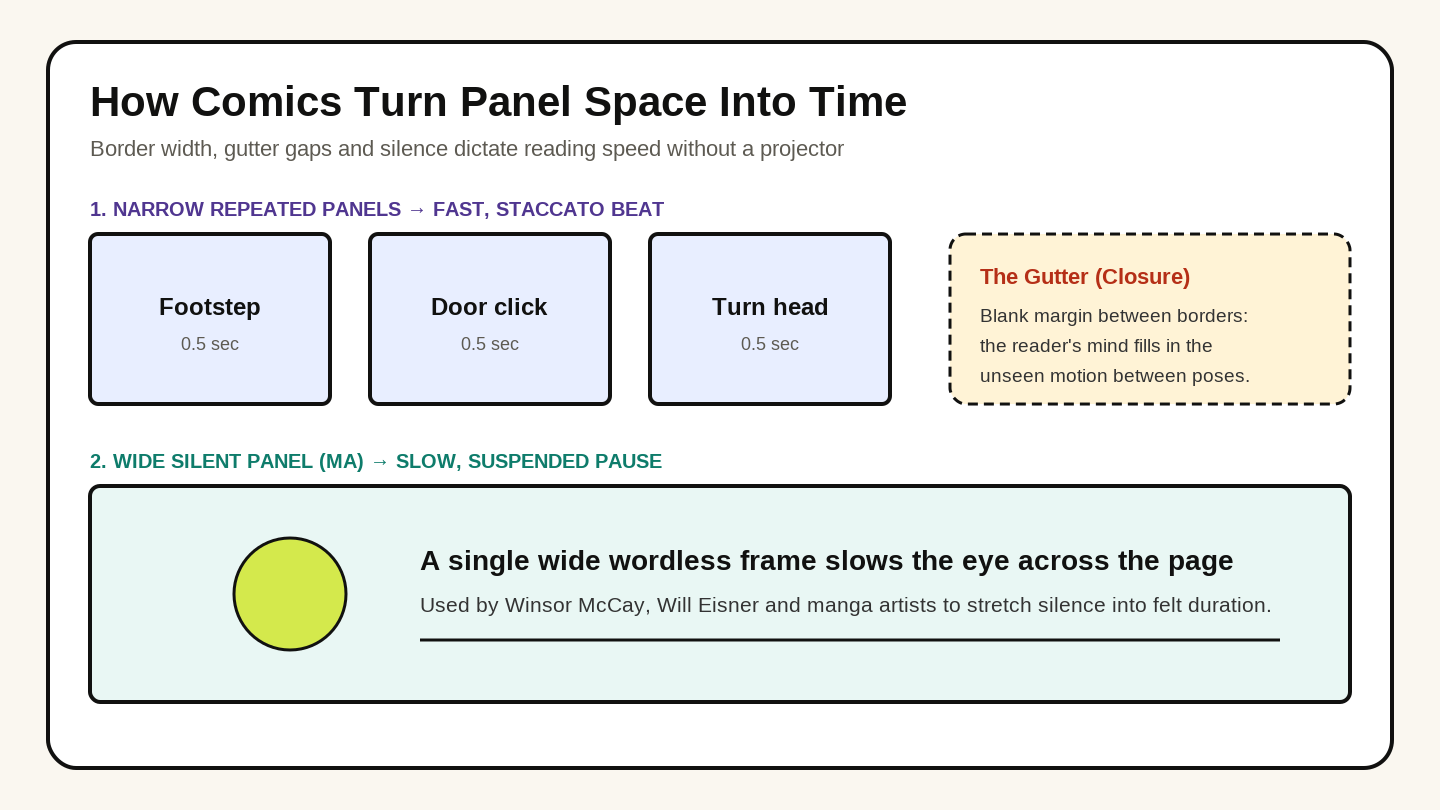
Diagram showing how comic panel width, speech bubbles, and the gutter between panels compress or stretch perceived story time.

How Comic Panels Turn Flat Space Into Moving Time

From Winsor McCay's Sunday pages to Scott McCloud's gutter theory and manga's use of ma, how static drawings make readers feel seconds, pauses and decades.

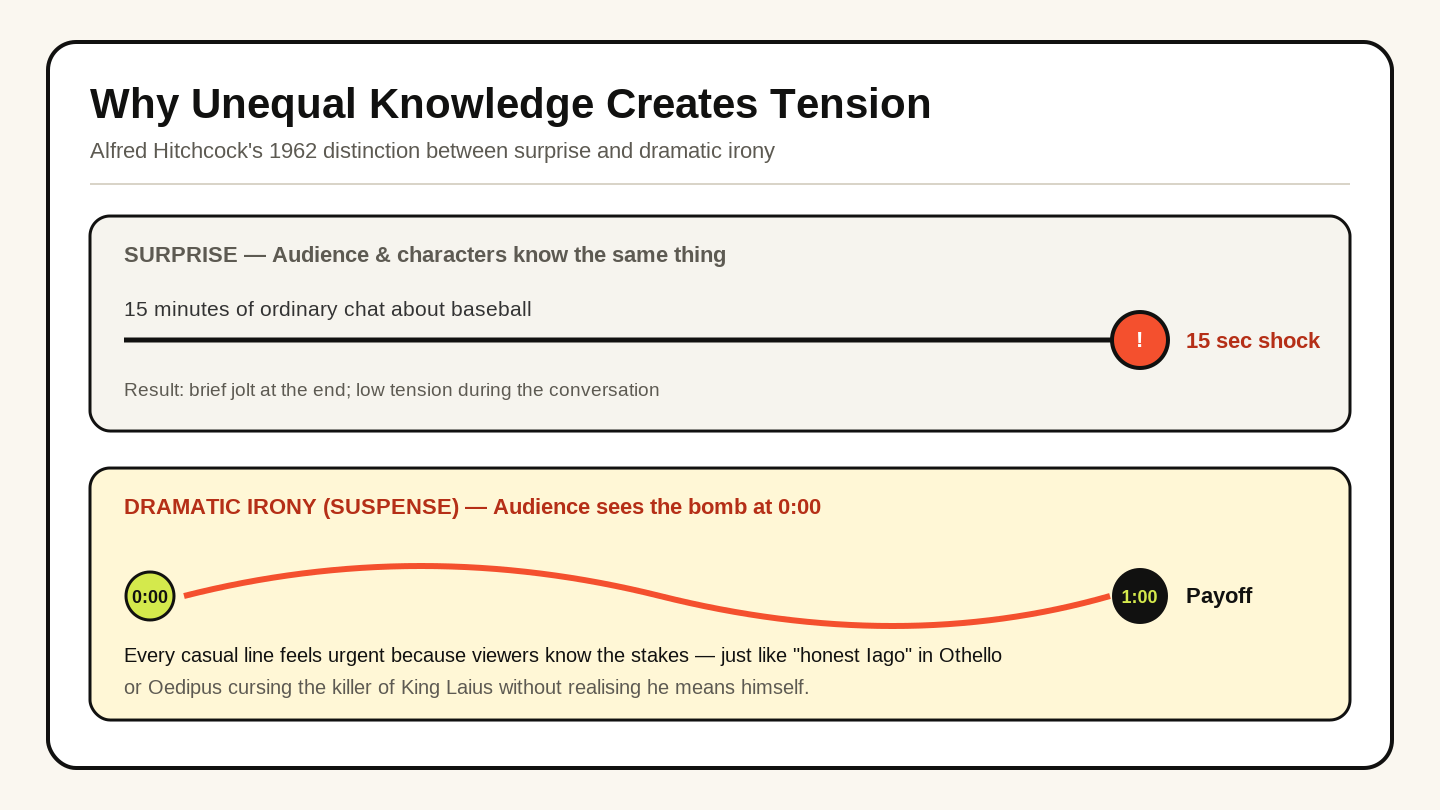
Diagram comparing surprise versus suspense using Hitchcock's bomb-under-the-table model and Shakespeare's Othello information gap.

Dramatic Irony: Why Knowing More Than the Characters Hooks Us

From Sophocles' Oedipus Rex and Shakespeare's Othello to Alfred Hitchcock's bomb under the table, why unequal knowledge generates far more tension than a surprise twist.

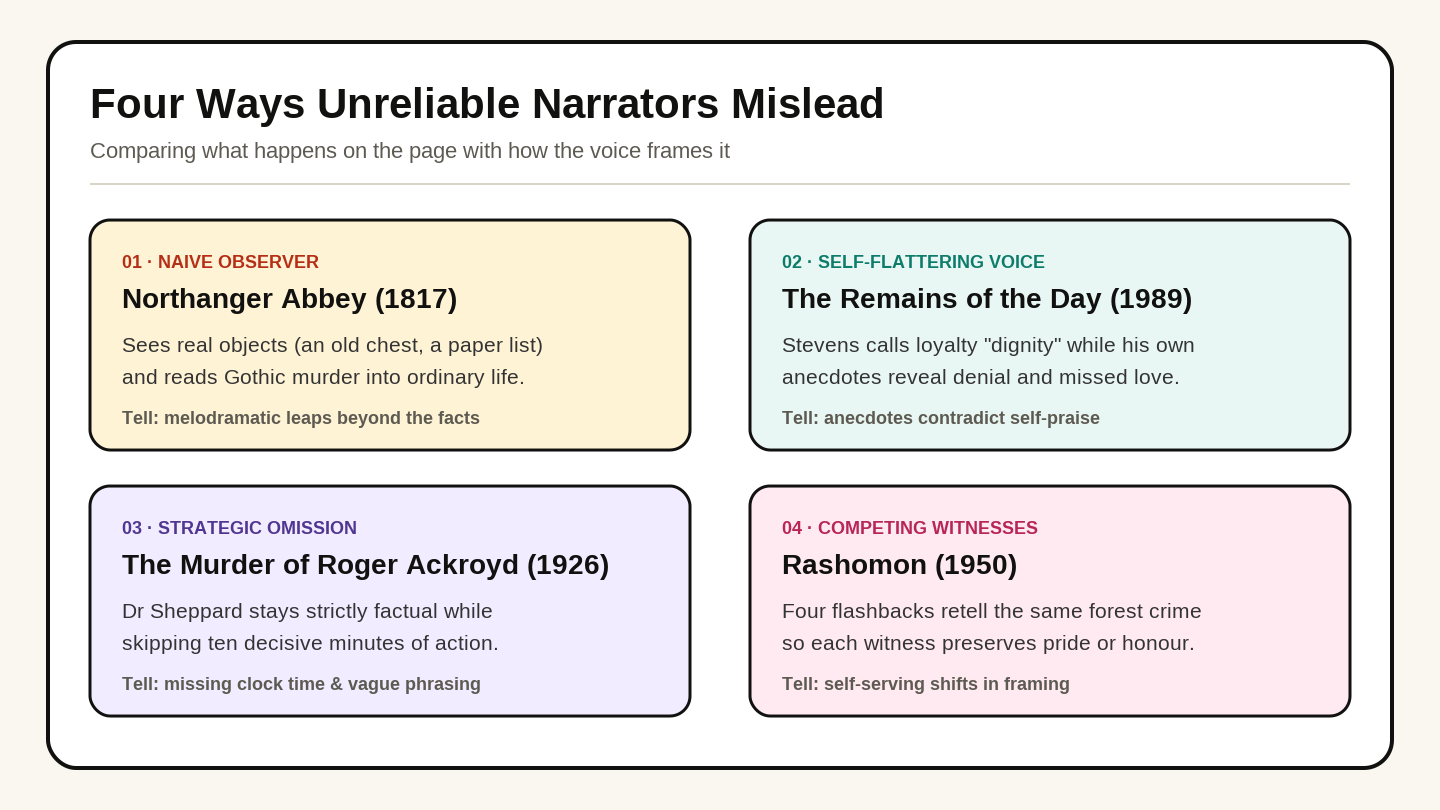
Diagram comparing four classic unreliable narrator types: naive observer, self-justifying confidant, selective witness, and deliberate concealer.

How Unreliable Narrators Trick Us (And How to Catch Them)

From Jane Austen's Catherine Morland to Agatha Christie's Dr Sheppard and Akira Kurosawa's Rashomon, the craft of telling a story through a voice you cannot quite trust.

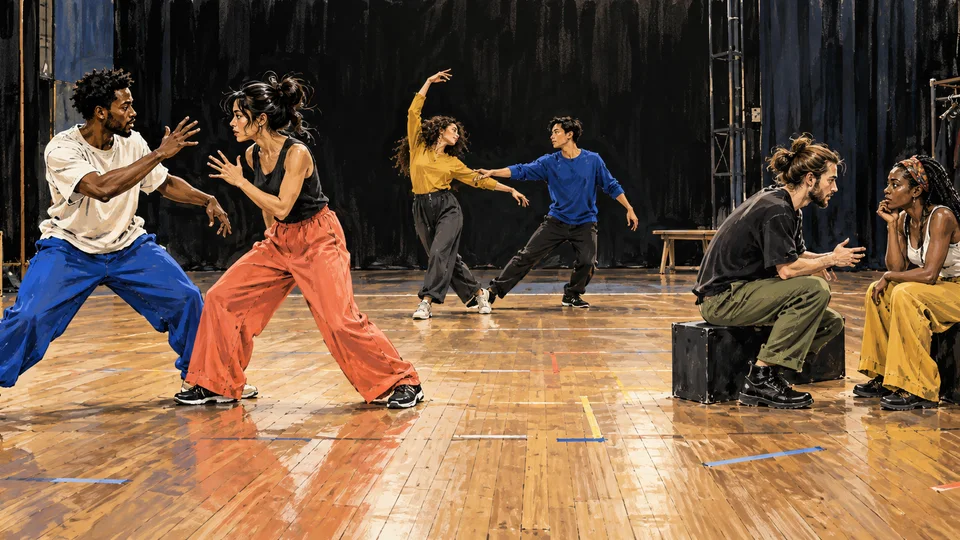
Performers rehearse several different roles together on a wooden stage.

The Ensemble Formula

Six characters make fifteen pairings, and that arithmetic quietly governs how casts are built, balanced and eventually turned into quizzes.

Several styles of chair stand in a sunlit stone room.

A Short History of Sitting Somewhere

Coffee houses built institutions, sociologists gave the corner table a name, and the research on where we put desks is less flattering than the brochures.

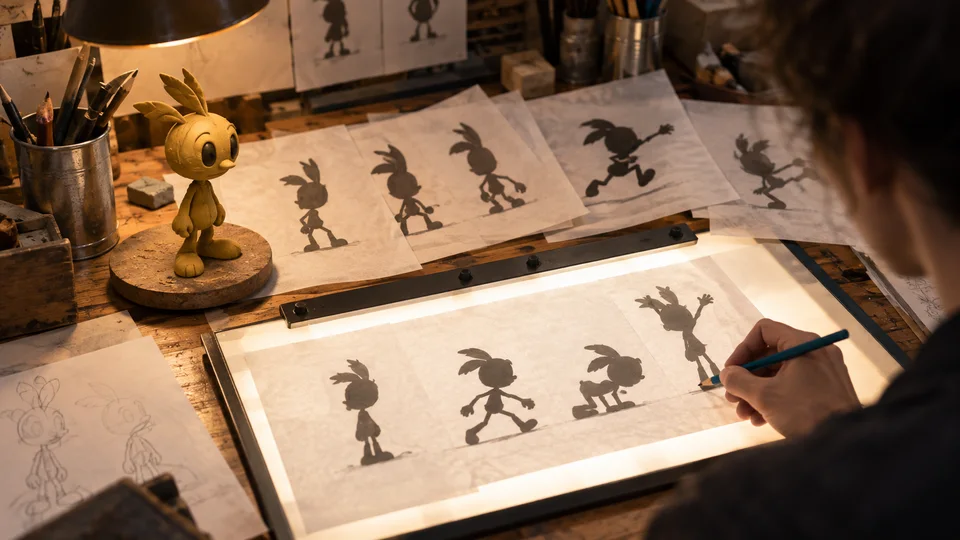
Hands sketch a cartoon character in several poses beside a small wooden figure.

How Animation Makes a Character Readable in One Frame

Fill the drawing in solid black. If you can still tell who it is, the design works. A century of animation craft rests on that one test.

A viewer stands before large collaged portraits of contrasting story characters.

Why 'Which Character Are You' Refuses to Die

The format outlived print, three social platforms and a lot of scorn. The research on why involves a 1956 paper that almost everyone misquotes.

A hand adjusts a wall collage of photographs, fabric and visual references beside a bed.

How an Aesthetic Gets Its Name

Cottagecore, goblincore, normcore. The suffix is doing real work, and normcore left enough of a paper trail to show exactly how one of these labels travels.

Headphones and music imagery fill a bedroom overlooking a city at dusk.

Why Teenage Music Never Leaves You

The songs from your late teens hold on with unreasonable strength. Memory researchers have a name for the shape of that grip, and an argument about it.

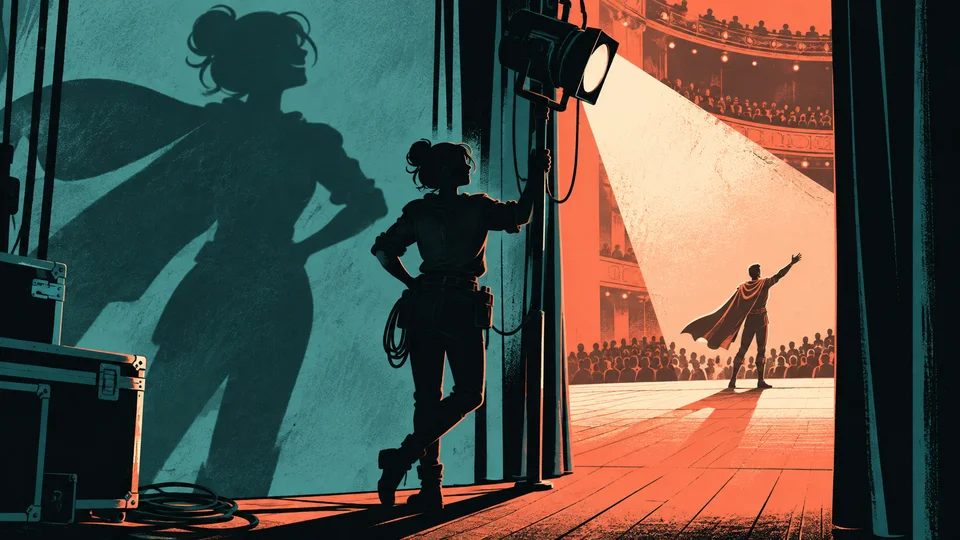
A smaller backstage figure casts a large shadow while a hero stands in the spotlight.

The Sidekick Problem

A hero alone on stage cannot explain anything. The companion began as a device for fixing that, and then quietly took over the story.

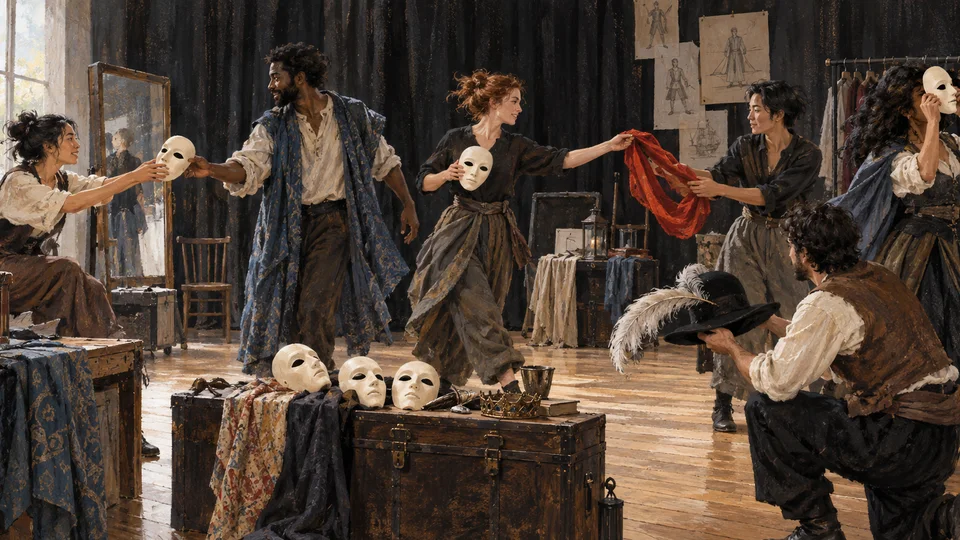
Performers use masks and costume pieces while rehearsing on a theatre stage.

How Character Archetypes Actually Work

Propp counted the moves in Russian folktales, Campbell claimed one story ruled them all, and Jung meant something narrower than anyone remembers.

Quizzes edited by Lisa