Play a little. Find something worth thinking about.
Character matches, world-builder tests, trivia runs and vibe checks. Every one comes with a written piece on where the idea actually came from.
Start with this one
Which Animated Sidekick Are You, Really?
Start here
hand-picked, no repeats






Pick a lane
Keep going
more to find out





























Reading room
All articles
The Logic Gates Hiding Inside Your Favourite Game
Players keep building working calculators out of game mechanics. The reason it is possible says something surprising about what a computer really is.

Why Every Map Lies to You
You cannot flatten a sphere without breaking something. A look at projections, what Mercator was actually for, and the long argument over Gall-Peters.
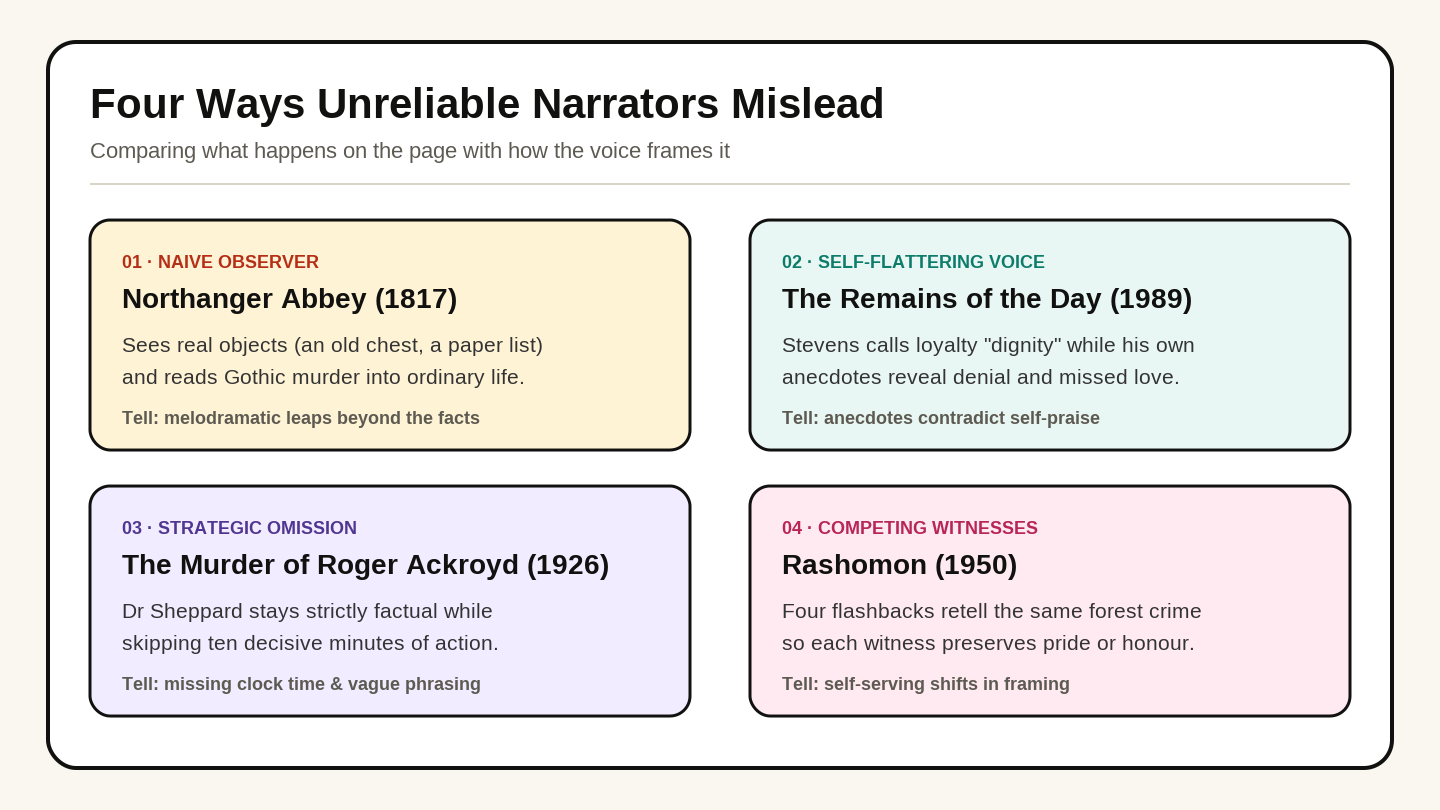
How Unreliable Narrators Trick Us (And How to Catch Them)
From Jane Austen's Catherine Morland to Agatha Christie's Dr Sheppard and Akira Kurosawa's Rashomon, the craft of telling a story through a voice you cannot quite trust.
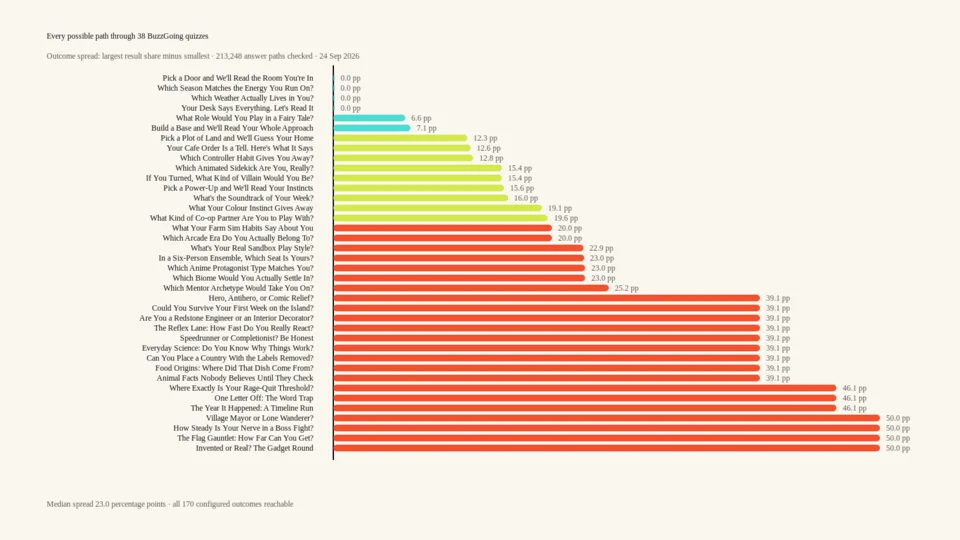
We Tested Every Possible Path Through Our 38 Quizzes
A reproducible audit of 213,248 answer combinations, 210 questions and 170 outcomes— including the imbalance we found in our own scoring rules.
BuzzGoing: a quiz arcade that shows its working
BuzzGoing is a quiz site with a reading habit. Underneath every quiz there is a written piece explaining where the idea genuinely comes from, whether that is Vladimir Propp cataloguing folktale roles in 1928, the logic gates people build inside sandbox games, or the reason a flag with four colours and a coat of arms tends to fail as a design. Answer the questions, read the background, or do only one of the two.
Quizzes are sorted into five lanes. Character Match is about archetypes and the fictional people we quietly borrow from. Virtual Worlds covers sandboxes, survival systems and the odd societies players build when nobody is issuing objectives. Arcade is reflexes, boss fights and controller habits. Trivia Gauntlet is knowledge with a scoreboard attached. Vibe Check is aesthetics, colour and the small preferences that give more away than a questionnaire.
None of it measures anything. These are not assessments, they diagnose nothing, and no result is a population percentile or a diagnosis. What they are good for is a few minutes of thinking, an argument with a friend about who got the better result, and picking up something true on the way past. The longer pieces in the reading room go further into the same territory.