BuzzGoing Editorial

Tina

Games & Systems Editor

Tina writes about video game design, sandbox building, procedural worlds, level wayfinding and multiplayer mechanics. She edits the Virtual Worlds and Arcade lanes and builds BuzzGoing's interactive explainers.

Tina edits 8 Reading Room articles and 16 quizzes on BuzzGoing. Questions or corrections can be sent to [email protected].
Articles by Tina

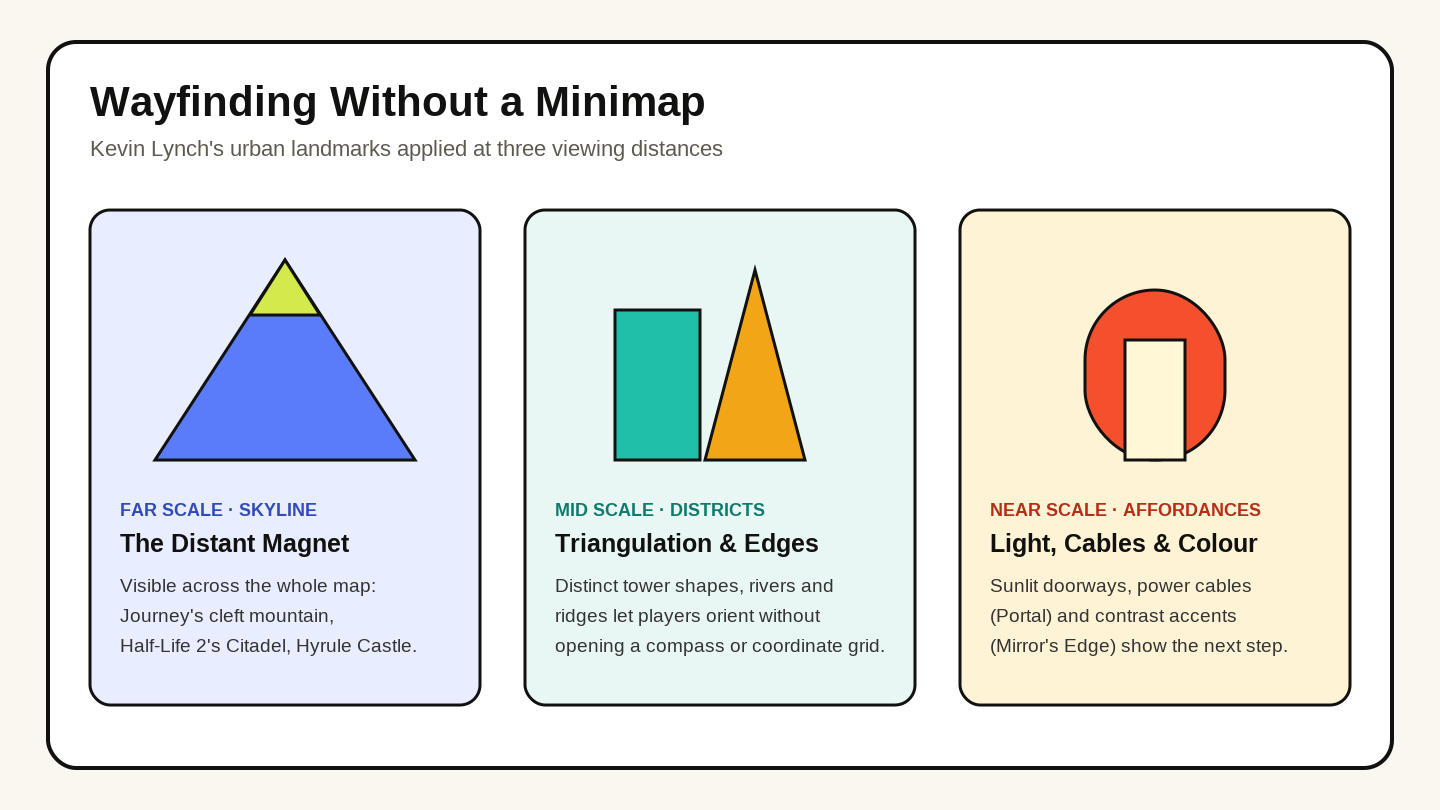
Diagram showing Kevin Lynch's wayfinding hierarchy in game worlds: distant skyline anchor, mid-range district silhouette, and close-up doorway cues.

How Game Worlds Guide You Without a Minimap or Glowing Arrows

From urban planner Kevin Lynch's 1960 city-mapping study to Zelda: Breath of the Wild, Half-Life 2 and Journey, how sightlines and silhouettes replace GPS clutter.

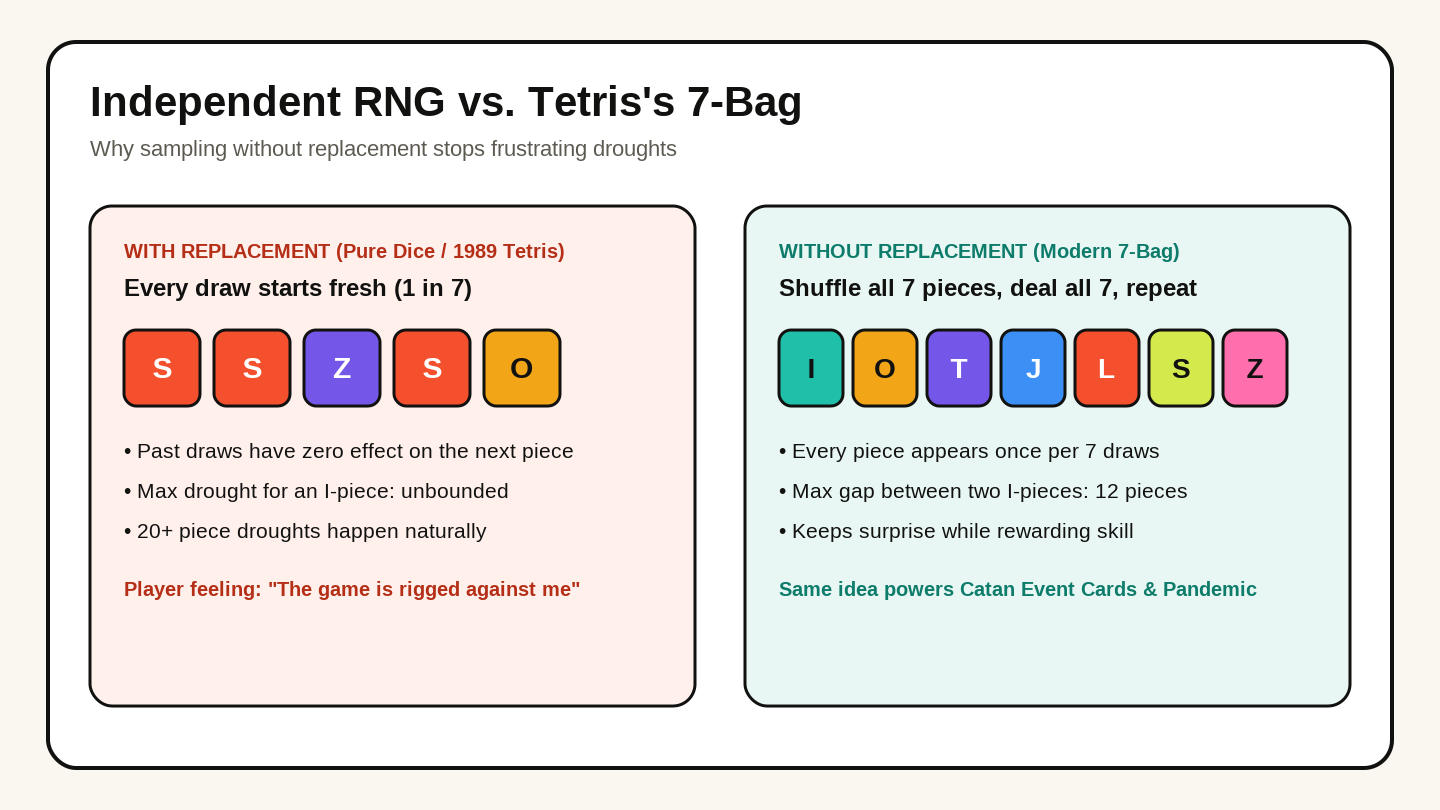
Diagram comparing independent dice rolls (sampling with replacement) against Tetris's 7-bag shuffle (sampling without replacement).

Dice vs. the 7-Bag: Why Pure Randomness Feels Unfair in Games

Why Tetris abandoned pure RNG for a 7-bag shuffle, why Catan's two dice differ from a deck of cards, and why game designers secretly rig odds to feel fairer.

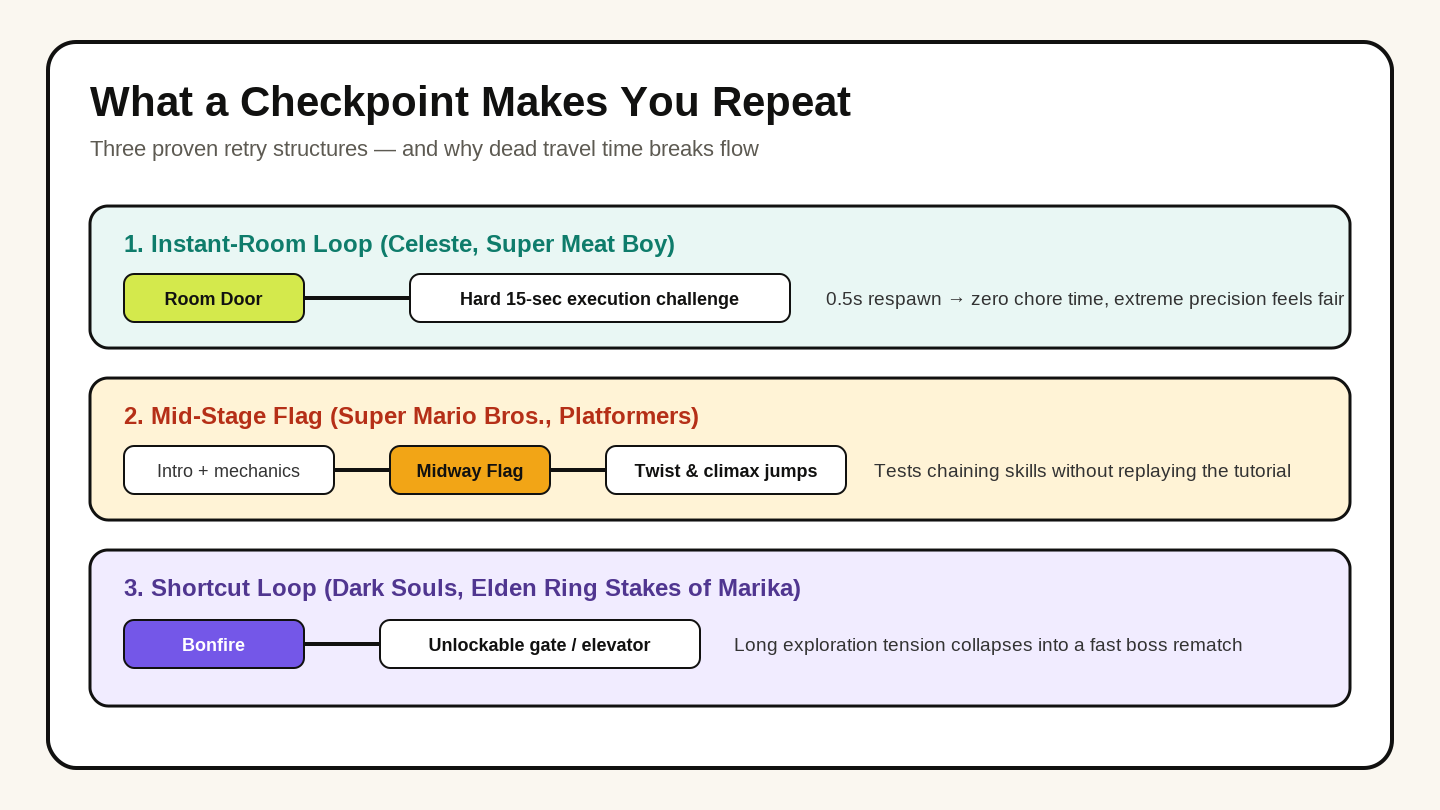
Diagram comparing checkpoint retry loops in Celeste (instant single-room retry), classic platformers (mid-level flag), and Dark Souls (unlockable shortcut loop).

Why Good Checkpoints Make Hard Games Feel Fair Instead of Cruel

Comparing Celeste's instant screen respawns, Dark Souls' bonfire shortcuts, and Super Mario's mid-level flags: what repeated time actually teaches a player.

An illustrated campsite holds a small fire, tools and a shelter in a forest clearing.

Why Survival Loops Hook Us

Scarcity, crafting trees and the pull of a nearly finished goal. How survival design holds attention, and where designers disagree about the ethics.

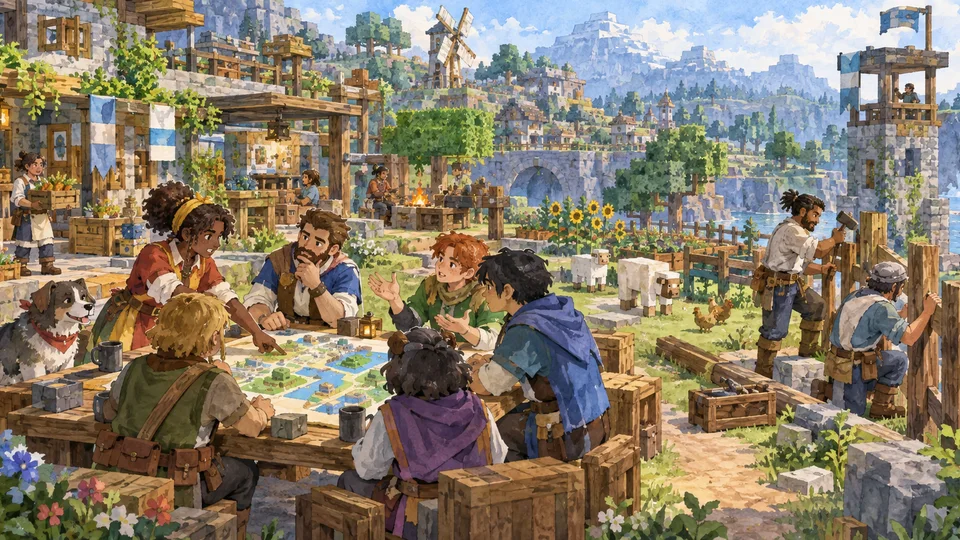
A group discusses a map amid a sprawling miniature settlement.

How Player Societies Govern Themselves

Persistent online worlds keep reinventing economics and politics from scratch. What they reveal about inflation, norms and the limits of coded rules.

A cutaway arcade cabinet reveals glowing circuits beneath a colourful game screen.

The Logic Gates Hiding Inside Your Favourite Game

Players keep building working calculators out of game mechanics. The reason it is possible says something surprising about what a computer really is.

Layered paper terrain progresses from a flat grid into a detailed mountain model.

How Procedural Generation Actually Works

Seeds, noise functions and the arithmetic of endlessness. What a machine can genuinely invent, and where generated variety stops being meaningful.

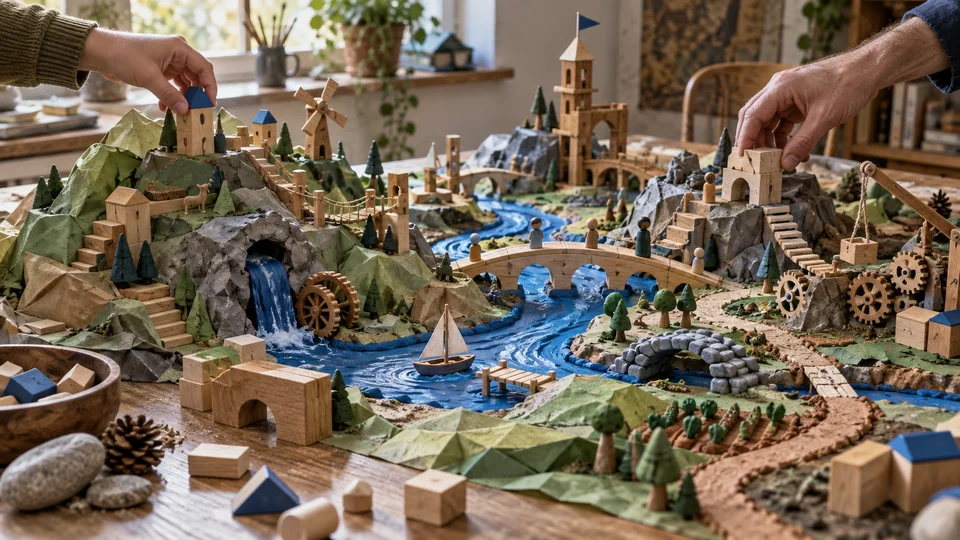
Hands assemble a miniature world of buildings, trees, waterways and bridges.

What Sandbox Games Taught Us About Play

Open worlds removed the objective marker and something strange happened: people kept playing. A look at how sandboxes rewired the idea of a game.

Quizzes edited by Tina