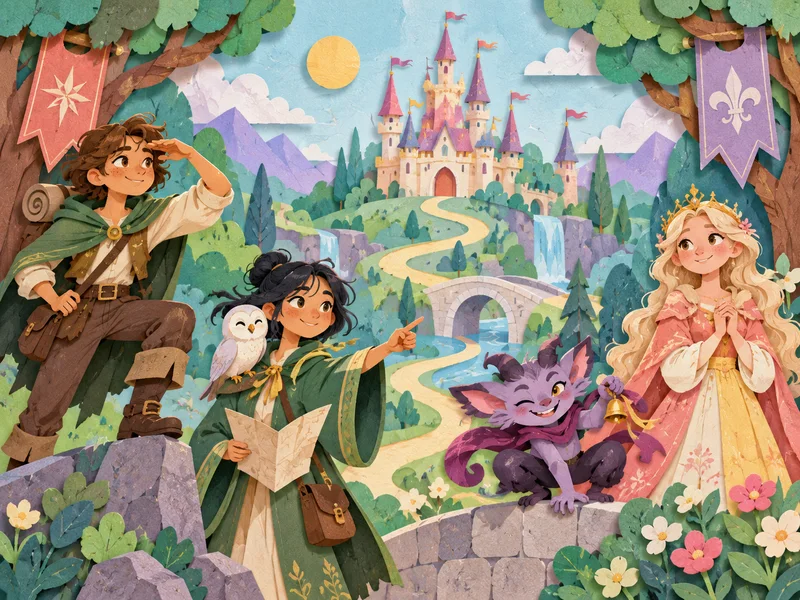
What Kind of Co-op Partner Are You to Play With?
Co-op is a strange social contract. Two people agree to share one problem, and within about ten minutes it becomes obvious who waits, who bolts, who talks and who quietly hands over the good loot without mentioning it.
These six questions are about the version of you that shows up in someone else's game, not the one that plays alone at two in the morning. Answer for a normal evening with a friend rather than a serious raid night, and try not to give yourself the benefit of the doubt.
See all the outcomes this quiz can land on, and what each one means →
Ringelmann pulled a rope and found the problem
In experiments credited to the French agricultural engineer Maximilien Ringelmann, published in the early twentieth century, people pulling on a rope produced less force each as the group grew. Eight men did not pull eight times as hard as one. Part of the shortfall was coordination, bodies getting in each other's way, and part of it was effort quietly evaporating. Bibb Latane, Kipling Williams and Stephen Harkins tested the second half in 1979 and gave it a name: social loafing, the tendency for individual effort to drop once individual contribution stops being visible.
Co-op games run into this constantly and the good ones design against it. Visible damage numbers, per-player revival counts, jobs that only one person can do while everyone watches them do it. These are not merely feedback. They are anti-loafing devices, and a game that leaves them out tends to produce one person carrying and one person along for the ride.
Most co-op arguments are information problems
The other reliable source of friction is asymmetry. You can see a mechanic your partner cannot. You know the route because you played it last week. You read the tooltip and they did not. From inside your own head the correct move is obvious, which makes their hesitation look like carelessness rather than what it actually is, an absence of the thing you happen to be holding.
Split-screen makes this vivid, because you can literally see the other person's half and start narrating it. Games that separate players into different rooms, roles or readouts are manufacturing the gap on purpose and asking you to bridge it with speech, which is why those designs produce both the best evenings and the worst ones. The cure is boringly simple and almost nobody does it: say what you can see before you say what to do.
A note on what a quiz can honestly tell you
Nothing about this one observes you playing with anybody. There is no timing, no reflex test and no measurement of your reactions or your usefulness, only six descriptions you supplied and a reading assembled from them, delivered with considerably more certainty than six answers deserve. Any percentage attached to a title in this corner of the site is rhetoric rather than arithmetic. If you want the honest version, ask the person you play with most often. They are sitting on data you do not have.
Research notes & further reading
The explanatory section above was checked against this reading trail.
More quizzes to try